Right around the birth of Christ, Rome was in the middle of taking over North Africa. When Carthage fell to the Romans in 146BC, Rome created the province of Africa Proconsularis, which consisted of what is now northern Tunisia. Over the next few centuries, the Roman lands in North Africa expanded to include northeastern Algeria and western Libya as well.

(Photo from Roman Provinces of the North Africa by Gustav Droysen, 1886)

The Battle of Carthage

(Photo by Dag Terje Filip Endresen, 2005)

Once one of the largest cities in the world, Carthage was a gem of Mediterranean society and one of the sea’s most important ports and trading cities. However, in 147BC, Carthage invaded Rome’s ally, Numidia, leading the Romans to lay siege to Carthage’s walls. By 146BC, the Roman army broke into the city and went house to house, clearing each as they went.
By the time the battle ended, all of the 112,000 citizens of Carthage were dead or enslaved by the Roman army (62,000 killed and 50,000 enslaved).
(You may have heard that the Romans even salted the fields in Carthage to ensure no one could come back to the city, but this ‘fact’ is almost certainly incorrect).
The city, which is now located in a suburb of Tunis, was eventually rebuilt by the Romans. Still, it would never come close to the notoriety that it had before the Roman invasion.
How Important was North Africa to Rome?
Contrary to what many assume, the North African provinces were critical to the expansion of the Roman Empire because North Africa exported a tremendous amount of food (largely cereals and olives) to Italy. North Africa was actually the primary place where Roman grain was grown.
The evolving cultures that sprang from North Africa also highly influenced the people of Italy and Sicily. After the invasions, the traditional North African style mixed with Roman influences, which in turn, traveled back to Rome. This mixture of culture eventually helped create the dominant society of the Roman Empire, which would heavily impact Western culture all the way up to the modern day.
Furthermore, an entire 15% of Rome’s senators came from the Africa Proconsularis province, so North Africans ended up having a heavy hand in the laws of the Roman world.
How Did Rome Change North Africa?
Of course, changes and improvements weren’t one-sided.
Like in many of their occupied territories, the Romans built infrastructure that would make doing business in North Africa easier as well as improve the lives of the people who lived there. The Romans built thousands of miles of roads and aqueducts as well as constructed bridges, dams, and irrigation systems in a part of the world that, until then, was primarily inhabited by nomadic peoples.

(Photo by Dennis Jarvis, 2012)
.jpg)
Religion also evolved during the Roman occupation. Many Jews came to the North African provinces after they were exiled from Judea following the Great Revolt of 66AD. Additionally, when Christianity took off in Rome in the 3rd and 4th centuries, Romans converted the North Africans en masse to the new religion.
The religious and demographic changes that took place in North Africa during the Roman occupation would influence the region’s culture and history for two millennia.
When Did the Romans Leave North Africa?
The Romans primarily left North Africa in the 400s and 500s AD.
First off, the Roman Empire had already begun to fall apart when in the 370s AD, large amounts of Goths and other non-Romans began to enter Roman territory to get away from the Huns, who were pushing into Eastern Europe from Central Asia. After this point, the central government in Rome started to become weaker and weaker.
Then, in 429 AD, a group called the Vandals, originally from southern Poland, invaded North Africa via Spain, weakening Roman rule in the area even further.


Later on, by 533 AD, Justinian, the leader of the Byzantine Empire, which controlled much of the land around the Eastern Mediterranean, destroyed the Vandal Kingdom. The further destabilization of the area led to Roman rule weakening even more. At this point, the Berbers, who were the original nomadic inhabitants of a lot of North Africa, returned from the southern deserts where they had fled when Rome conquered the area. They quickly grabbed as much land as they could, leaving almost nothing for the failing Roman Empire.

(Photo by Notwist, 2006)

Bonus Facts:
- The word ‘Africa’ comes from the Roman name for Tunisia.
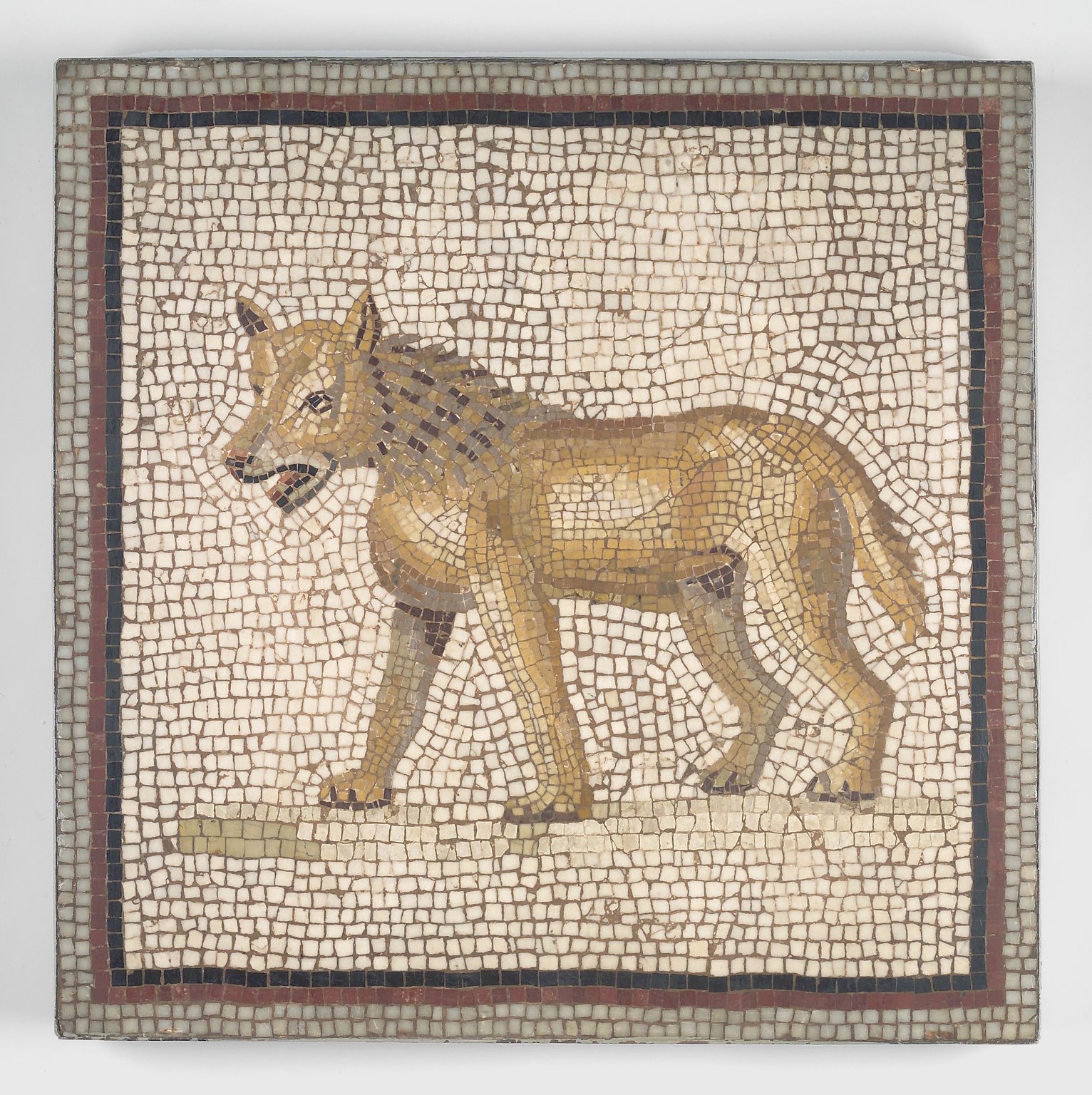
- Researchers have found the most preserved Roman mosaics in North Africa.

(Photo by Kritzolina, 2019)

- St. Augustine, the Bishop of Hippo, was born in Thagaste, a Roman-Berber city, now located in modern Algeria.
You May Also Like: Rich Africa: The Trans-Saharan Gold Trade
Previous: A Basic History of Guns
Leave a Reply