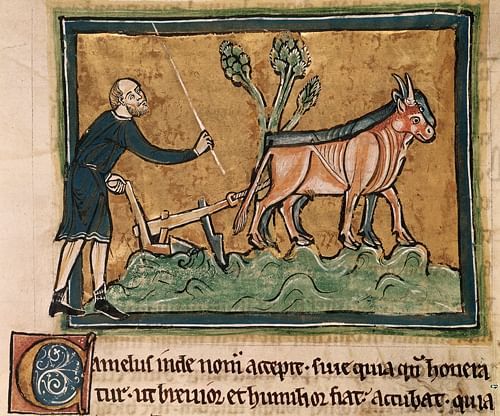
The heavy plough allowed the growth of Northern European cities, since, for the first time, the heavy clay soil could be easily farmed.

(Photo from Chizhik Pizhik)

Previously, the southern cities were the center of the continent because older models of ploughs could only easily be used on the loose, dry soil common in that area.
The heavy plough allowed thick, moist soil to be cut both horizontally and vertically and turned to allow better drainage and weed control, and permitted manure to be incorporated more easily. It also meant crops could be cultivated for longer periods of time, since during the dry season crops could grow in the furrow of the dirt and on the crest in the wet season.

(Photo from Internet Archive Book Images)
_(20804764955).jpg)
This agricultural breakthrough spurred the economic development of northern cities between 900 and 1300 AD because higher food yields meant the population could grow around urban areas.


You May Also Like: Origin of the Castle
Previous: The Color TV
Next: The Bantu Migration: The Origins of Modern Southern Africa
Leave a Reply