1. Aniakchak National Monument and Preserve


(Photo by US National Park Service -1977)
Where: Alaska – South of Bristol Bay
2019 Visitors: 100
Aniakchak’s remote location makes it one of the most wild places in the National Park System. Located in Alaska’s ‘Ring of Fire,’ the park contains a 6 mile wide caldera formed by a volcanic eruption 3500 years ago. The entire park is home to brown bears, who are quite common in this part of Alaska.
2. Rio Grande Wild and Scenic River


(Photo by Daniel Schwen)
Where: Texas – Border with Mexico
2019 Visitors: 324
This stretch of the Rio Grande flows for 196 miles through desert and canyon country. This national park runs through the hot springs historic district, which has a millennia-long history as a healing resort.
3. Port Chicago Naval Magazine National Memorial


(Photo by the US National Park Service)
Where: California – 36 miles from San Francisco
2019 Visitors: 830
A little known WWII disaster, the Port Chicago Naval Magazine tragedy killed 320 people on July 17th 1944. Two ships that were being loaded with ammunition for the Pacific theater exploded in a blast big enough to crack windows in San Francisco more than 30 mies away. It was the deadliest home front disaster of WWII.
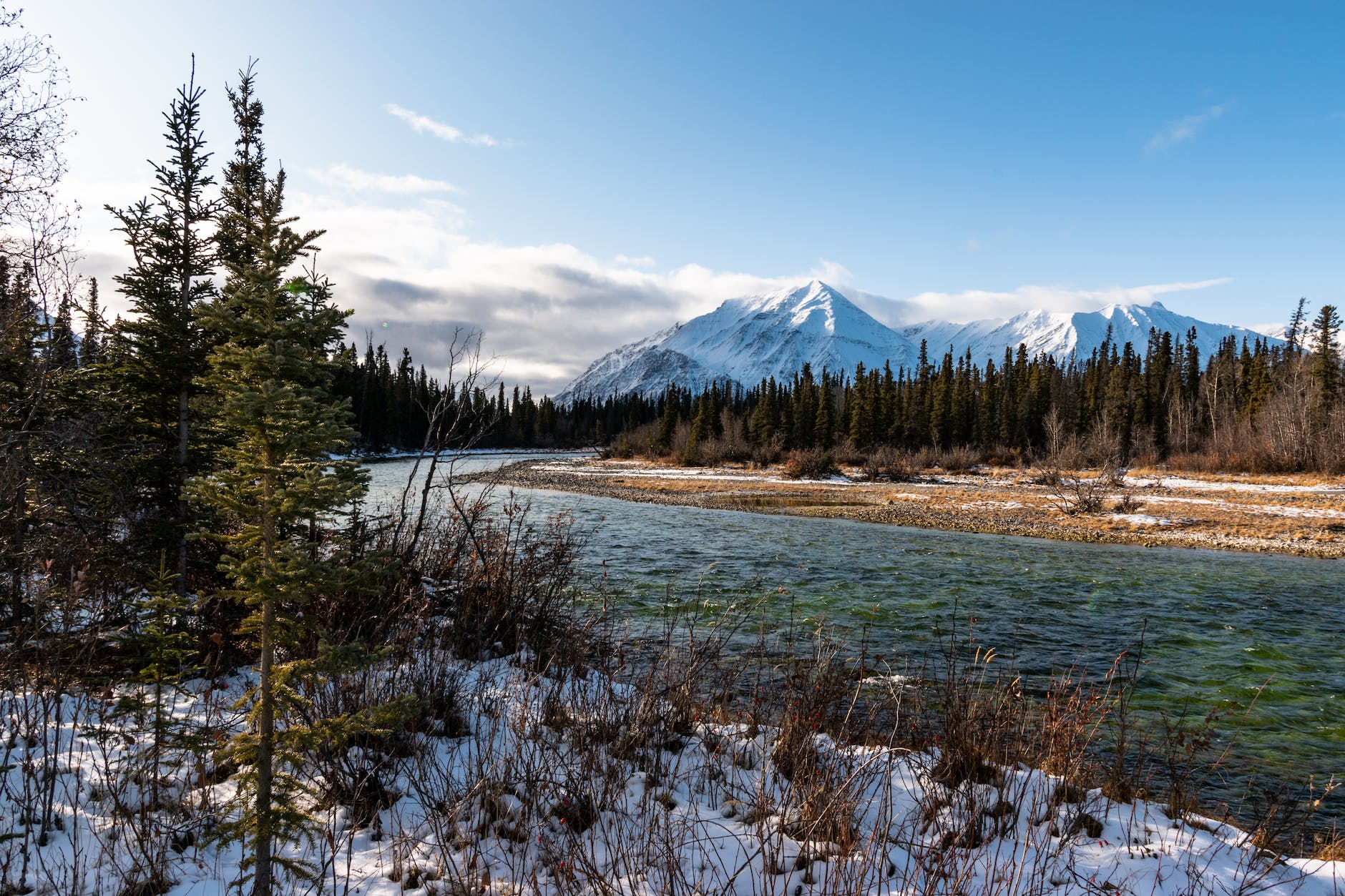
4. Yukon-Charley Rivers National Preserve


(Photo by US Geological Survey – 2008)
Where: Alaska – Between Fairbanks and Yukon Province
2019 Visitors: 1114
Another of Alaska’s secluded landscapes, Yukon-Charley Rivers Preserve is a largely untouched landscape. Despite its remoteness, this area was home to the oldest known occupants of Alaska who lived 14,000 years ago. America’s ‘last great gold rush’ in the late 1890s opened up mining which still persists today.
5. Thaddeus Kosciuszko National Monument

.jpg)
(Photo by US National Park Service – 2018)
Where: Philadelphia, Pennsylvania – Pine Street
2019 Visitors: 1921
Thaddeus Kosciuszco was a Polish freedom fighter who designed many fortifications during the American Revolution. A man who Thomas Jefferson called “As pure a son of liberty, as I have ever known,” Kosciuszco’s importance to securing American independence is largely forgotten today. Kosciuszco helped to design and fortify Fort Mercer in New Jersey and Fort West Point in New York and contributed to the American victory at Saratoga.
6. Carter G. Woodson Home National Historic Site


(Photo by Shujenchang)
Where: Washington DC – 9th Street NW
2019 Visitors: 2381
Carter G. Woodson was one of the most important preservers of African American history, and the founder of Negro History Week (now celebrated as Black History Month). His home was the headquarters of the Association for the Study of African American Life and History, The Journal of Negro History, and The Negro History Bulletin. Described as a center of learning, people such as Langston Hughes worked here.
7. Bering Land Bridge National Preserve


(Photo by Mx. Granger)
Where: Nome, Alaska
2019 Visitors: 2642
Bering Land Bridge lies at an important crossroad for animal and human movement that greatly influenced life in the Pleistocene Epoch (2.5 million to 11,700 years ago). The Bering Strait, which lies between Alaska and Russia, was once frozen, allowing life to venture from Asia to North America. This national preserve is home to caribou, muskoxen, arctic and red fox, brown and polar bears, and walrus.
8. Eugene O’Neill National Historic Site


(Photo by US National Park Service – 2005)
Where: California – 31 miles from San Francisco
2019 Visitors: 2944
America’s only Nobel Prize winning playwright, O’Neill wrote The Iceman Cometh, Long Day’s Journey Into Night, and A Moon for the Misbegotten within the walls of his California home. O’Neill, who lived a restless life, finally settled in this secluded 158-acre ranch in the San Ramon Valley. Alongside his Nobel Prize (1936), he also won four Pulitzers.
9. Nicodemus National Historic Site


(Photo by US National Park Service – 2006)
Where: Kansas – 232 miles from Wichita
2019 Visitors: 3540
After the Civil War, newly emancipated African Americans were told to head west to experience more freedom, and Kansas was considered the ‘Promised Land’ since it was so far removed from the rest of American society. Nicodemus is the oldest and only surviving Black settlement west of the Mississippi River. Containing five buildings, a townhall, a home, two churches, and a school, this historic site offers a glimpse into the plight for freedom from a society that rejected them.
10. Mary McLeod Bethune Council House National Historic Site


(Photo by Kurt Kaiser – 2021)
Where: Washington DC – Vermont Ave NW
2019 Visitors: 3788
The Mary Mcleod Bethune Council House was the original headquarters of the National Council of Negro Women. A historian and activist, Bethune was the first female president of Carter G. Woodson’s Association for the Study of African American Life and History. The home received many important guests, such as Eleanor Roosevelt and Josephine Baker.
11. Clara Barton National Historic Site

(Photo by Carol M. Highsmith)
Where: Maryland – 9 miles from Washington DC
2019 Visitors: 4100
Clara Barton worked tirelessly to protect the lives of those around her. She was the founder of the American Red Cross (1881) after her service in the American Civil War and the Franco-Prussian War. This Glen Echo home is where she spent the last 15 years of her life, and was the headquarters of the American Red Cross from 1897-1904.
12. Salt River Bay National Historic Park and Ecological Reserve


(Photo by Eoghanacht)
Where: US Virgin Islands – Saint Croix Island
2019 Visitors: 5215
Salt River Bay contains the earliest indigenous settlements of the central Caribbean. Christopher Columbus landed here in 1493, and, in the following centuries, the inhabitants of this island fought with seven different colonial powers. A lot of archeological work has been done at this site, but many of the artifacts are currently held in Denmark.
13. Sand Creek Massacre National Historic Site


(Photo by Chris Light)
Where: Colorado – 157 miles from Colorado Springs
2019 Visitors: 5701
On November 29th 1864, in the open prairie of eastern Colorado, 675 U.S. volunteer soldiers attacked a village of Cheyenne and Arapaho natives. Many of the Indian combatants fled the camp, but many women, children, and elderly attempted to escape into the dry stream bed where they were shot. Over the course of eight hours, about 200 Cheyenne and Arapaho were killed.
14. Fort Bowie National Historic Site


(Photo by Scotwriter – 2008)
Where: Arizona – 120 miles from Tucson
2019 Visitors: 7577
For almost 25 years, southeast Arizona witnessed ongoing conflict between the US Army and the Chiricahua Apache. Fort Bowie was the center of these battles, which eventually led to the surrender of Geronimo in 1886. The Chiricahua were banished to Florida and Alabama and then, eventually Oklahoma.
15. Frederick Law Olmsted National Historic Site


(Photo by Daderot – 2005)
Where: Massachusetts – 6 miles from Boston
2019 Visitors: 7791
Frederick Law Olmsted was the planner of many of America’s most famous parks, including Central and Prospect Park in New York, Niagara Reservation, and Emerald Necklace in Boston. During Olmsted’s lifetime in the 19th century, America’s population was steadily moving from rural to urban, so Olmstead wanted to re-create the countryside in the city centers. His Massachusetts home served as his planning office.
Photos from the National Park Service are in the Public Domain
You May Also Like: The Cliff Dwellings of Mesa Verde
Previous: : The Compass: The Invention That Discovered the World
Leave a Reply